Headless vs. Hybrid CMS: Which Is Right for You?
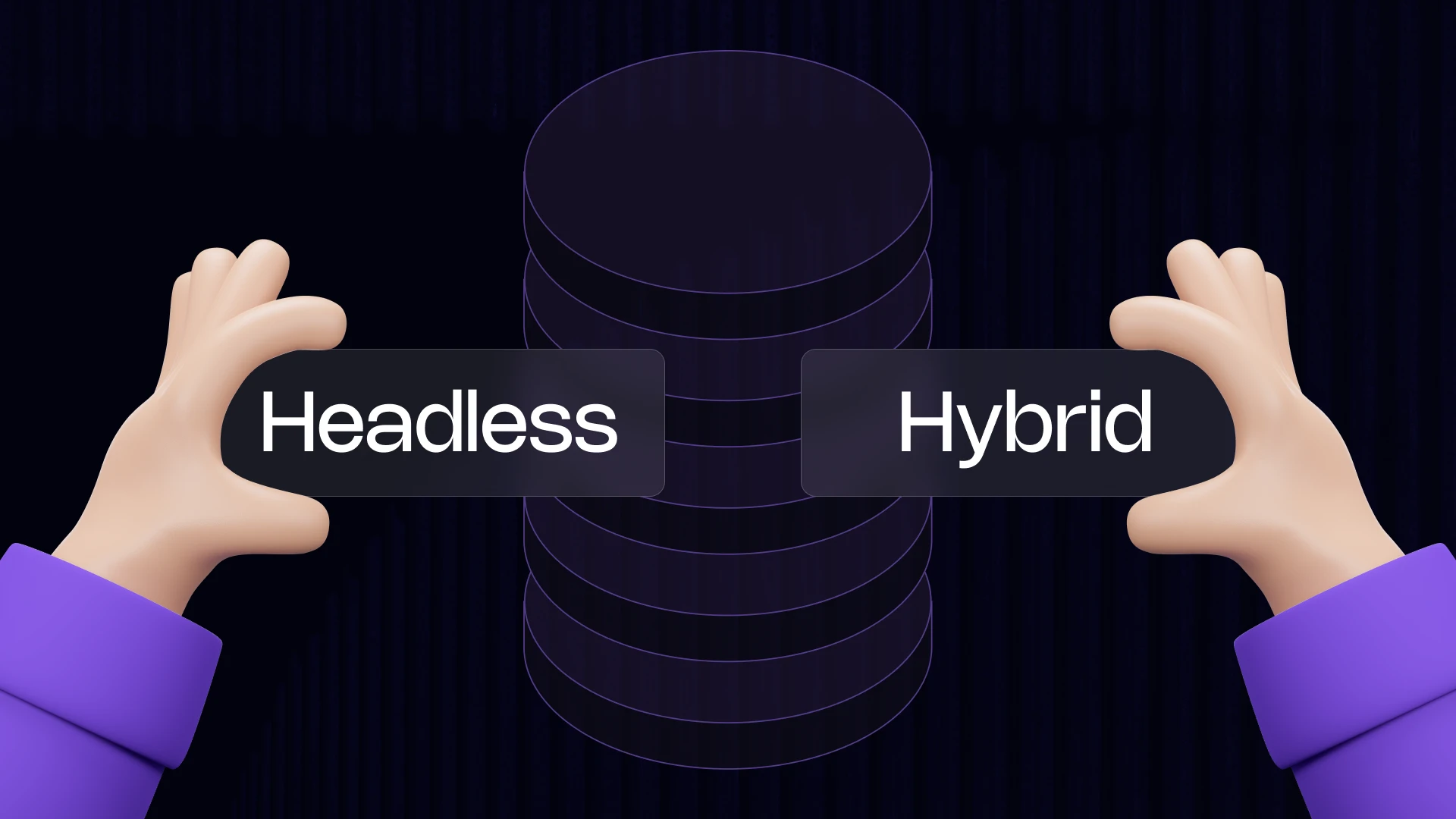
A headless CMS stores your content and delivers it through an API to any front end. A hybrid CMS does the same and also gives editors a visual interface and templates. Choose headless when developers build the front end and editors need little, and hybrid when marketers and developers both work in the same system.
What is a headless CMS?
A headless CMS separates the front end (what people see) from the back end (where content lives). Content sits in one repository and is delivered through APIs to a website, an app or any other channel. The "head" is the front end that has been cut off, so developers can choose any technology without affecting the content.
Where does the traditional CMS fit?
In a traditional CMS, content and presentation are tied together, which is simple for one website but rigid when you need the same content on an app, a screen or a marketplace.
What are the benefits of a headless CMS?
- Flexibility. The same content can be used on many channels and devices.
- Scalability. Content can reach more platforms through APIs without being rebuilt.
- Future-proofing. You can change the front end without moving the content.
The drawbacks are real: higher development cost and complexity, and editors depend on developers because a pure headless system usually has no page editor or drag-and-drop tools.
What is a hybrid CMS?
A hybrid (or headless hybrid) CMS combines headless delivery by API with the features of a traditional CMS: an editing interface, previews and templates. Developers and marketers each get the control they need and can work independently.
What are the benefits of a hybrid CMS?
- Everything in one place. API delivery for developers, templates and a friendly editor for marketers.
- Faster to build. Less custom work than a strictly headless setup.
- Less waiting. Editors can change content without asking a developer for every small step.
How do you choose between headless and hybrid?
Start from your content, your team and your channels:
- An app or device with few editing needs: headless is usually enough.
- A website with rich pages, many editors and content reused across channels: hybrid is usually the better fit.
- A simple website for a small business: you may not need either. A builder with a built-in CMS, or an AI builder like Divhunt Studio where you describe the site and change it by chatting, can be enough. See website builder vs coding and the templates you can start from.
Structured content is the foundation either way: lists of items you can add to, such as projects, products or lessons. Repeater fields are the usual way to model them.
FAQ
What is the difference between headless and hybrid CMS?
Headless has no front end of its own; hybrid adds an editing interface and templates on top of API delivery.
Is headless CMS better for SEO?
Neither is better by itself. SEO depends on how the front end is built and how fast the pages are; see website builders for SEO.
Do small businesses need a headless CMS?
Usually not. A small business website works well on a builder with a built-in CMS.